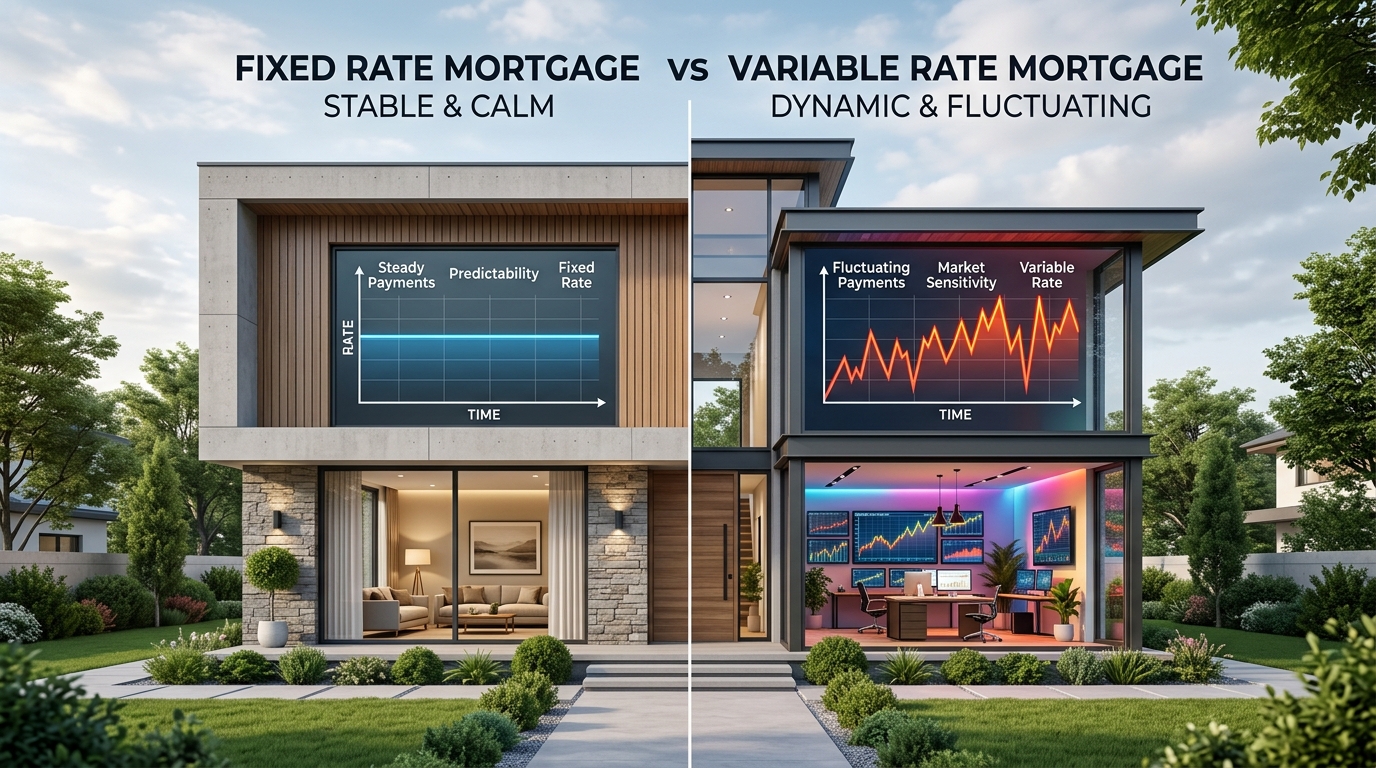
Choosing between a fixed vs variable mortgage is one of the most important financial decisions you will make when buying a home. Your mortgage type affects your monthly payments, long-term interest costs, and overall financial stability. Understanding the differences can help you select the right option based on your goals, risk tolerance, and market conditions.
In this guide, we break down everything you need to know about fixed and variable mortgages, including benefits, risks, and expert tips to make the best decision.
What Is a Fixed Mortgage?
A fixed mortgage offers a consistent interest rate for the entire term of the loan. This means your monthly payments remain the same, regardless of market fluctuations.
Key Features of Fixed Mortgages
– Stable interest rate throughout the loan term
– Predictable monthly payments
– Protection from rising interest rates
Fixed mortgages are ideal for borrowers who value stability and want to avoid surprises in their monthly budget.
Pros of Fixed Mortgages
– Budget certainty
– Easier financial planning
– Peace of mind during economic uncertainty
Cons of Fixed Mortgages
– Higher initial interest rates compared to variable loans
– Less flexibility if rates decrease
What Is a Variable Mortgage?
A variable mortgage, also known as an adjustable-rate mortgage (ARM), has an interest rate that can change over time based on market conditions.
Key Features of Variable Mortgages
– Interest rate fluctuates periodically
– Payments may increase or decrease
– Often starts with a lower initial rate
Variable mortgages can be appealing if you expect interest rates to stay low or decrease.
Pros of Variable Mortgages
– Lower initial interest rates
– Potential savings if rates drop
– Flexibility for short-term homeowners
Cons of Variable Mortgages
– Unpredictable payments
– Risk of rising interest rates
– Budget uncertainty
Fixed vs Variable Mortgage: Key Differences
1. Interest Rate Stability
A fixed vs variable mortgage comparison starts with rate stability. Fixed loans offer consistency, while variable loans fluctuate with the market.
2. Monthly Payments
Fixed mortgages provide predictable payments. Variable mortgages may change, making budgeting more challenging.
3. Risk Factor
Fixed loans are low risk. Variable loans carry higher risk due to rate changes.
4. Long-Term Cost
Variable mortgages may be cheaper if rates stay low. However, fixed mortgages protect you from rising costs.
Which Mortgage Is Right for You?
Choose a Fixed Mortgage If:
– You prefer stability and predictability
– You plan to stay in your home long-term
– You want protection from rate increases
Choose a Variable Mortgage If:
– You can tolerate financial risk
– You plan to sell or refinance soon
– You believe interest rates will decrease
Market Trends and Interest Rates
Understanding current interest rate trends is essential. You can monitor updates through reliable sources like
Federal Reserve or financial platforms such as
Bankrate.
When rates are low, variable mortgages may offer better savings. When rates are rising, fixed mortgages provide security.
Real-Life Example
Imagine you take a $300,000 mortgage:
– Fixed rate: 6.5% for 30 years
– Variable rate: Starts at 5.5% but can increase
If rates rise significantly, the variable mortgage could cost more over time. If rates stay low, you could save thousands.
Tips to Choose the Best Mortgage
1. Evaluate Your Financial Goals
Consider your long-term plans, income stability, and risk tolerance.
2. Compare Loan Offers
Always compare multiple lenders to get the best deal. Check fees, terms, and flexibility.
3. Use Mortgage Calculators
Online tools help estimate payments and interest costs. Visit
NerdWallet Mortgage Calculator to get started.
4. Consider Hybrid Options
Some loans offer a fixed rate for an initial period and then switch to variable. This can balance stability and flexibility.
Common Mistakes to Avoid
– Ignoring future rate changes
– Choosing based only on initial rates
– Not understanding loan terms
– Skipping professional advice
How Mortgages Relate to Financial Growth
Your mortgage choice plays a key role in building wealth. Lower payments can free up cash for investments, savings, or even starting an online business.
Some homeowners use savings from a lower-rate mortgage to explore opportunities like affiliate marketing or launching a dropshipping business. These ventures can create passive income streams over time.
Understanding financial strategies such as affiliate vs dropshipping can help you maximize your income while managing mortgage payments effectively.
Expert Advice
Financial experts recommend aligning your mortgage type with your life goals. If stability is your priority, fixed mortgages are ideal. If flexibility and potential savings appeal to you, consider variable loans.
Conclusion
The decision between a fixed vs variable mortgage depends on your financial situation, risk tolerance, and market outlook. Fixed mortgages offer stability and predictability, while variable mortgages provide flexibility and potential savings.
Take time to evaluate your options, compare lenders, and consult professionals if needed. The right choice can save you thousands of dollars and provide long-term financial security.
For more home financing tips, check our related guide:
How to Get the Lowest Mortgage Rates
