The automotive industry is undergoing one of the most significant transformations in its history. From electric vehicles to artificial intelligence-powered driving systems, innovation is reshaping how cars are designed, manufactured, and used. Understanding these changes is essential for consumers, investors, and businesses that want to stay competitive in a rapidly evolving market.
In this article, we explore Automotive Industry Insights: Latest Car Technology and Market Trends Explained in detail. You will learn about emerging technologies, shifting consumer behavior, and global market trends driving the future of mobility.
For additional reading on vehicle care and innovation, you can explore our Automotive Guide 2026 and Car Maintenance Checklist.
Overview of the Modern Automotive Landscape
The automotive sector is no longer limited to mechanical engineering. Today, it integrates software, connectivity, sustainability, and digital ecosystems. Major manufacturers are investing heavily in electric mobility, autonomous systems, and cloud-based vehicle services.
According to the International Energy Agency, electric vehicle adoption continues to grow globally, with record-breaking sales each year. This shift is driven by environmental regulations, consumer demand, and advancements in battery technology.
At the same time, traditional automotive companies are competing with tech giants entering the mobility space. This convergence is creating new business models and reshaping industry competition.
Latest Car Technology Transforming the Industry
1. Electric Vehicles (EVs) and Battery Innovation
Electric vehicles are at the center of the automotive revolution. Battery technology improvements have increased driving range, reduced charging time, and lowered costs. Companies like Tesla have pushed innovation forward, but legacy manufacturers are rapidly catching up.
Solid-state batteries are expected to be the next breakthrough, offering higher energy density and improved safety. This technology could redefine EV performance in the coming decade.
2. Autonomous Driving and ADAS Systems
Advanced Driver Assistance Systems (ADAS) are becoming standard in modern vehicles. Features such as lane-keeping assist, adaptive cruise control, and automatic emergency braking are improving road safety.
The Society of Automotive Engineers (SAE) defines levels of automation from Level 0 (no automation) to Level 5 (full autonomy). While fully autonomous cars are still in development, semi-autonomous systems are already widely available.
3. Artificial Intelligence in Vehicles
AI is powering smarter navigation, predictive maintenance, and personalized driving experiences. Modern cars can now learn driver behavior and adjust settings automatically for comfort and efficiency.
AI also plays a crucial role in autonomous driving systems by processing real-time data from sensors, cameras, and radar.
4. Connected Cars and IoT Integration
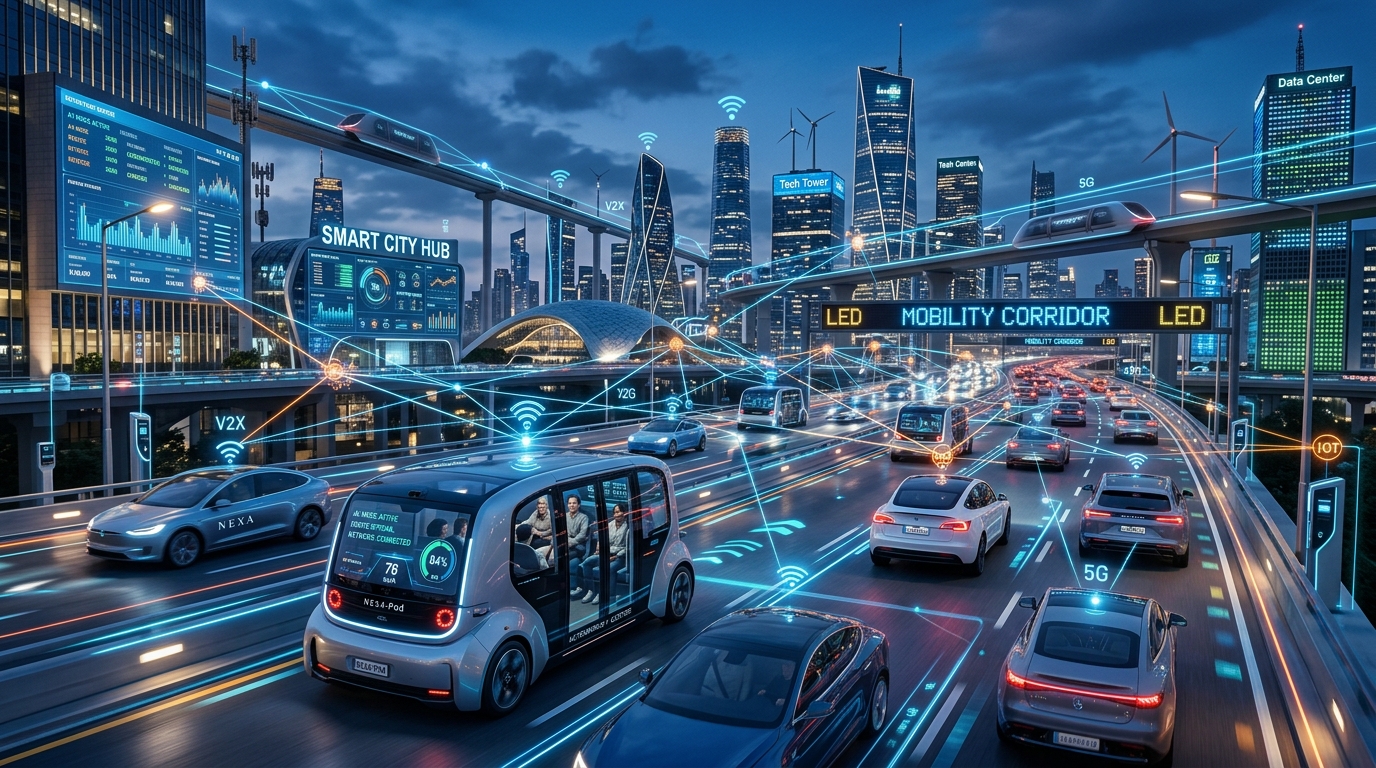
Connected vehicles are part of a broader Internet of Things (IoT) ecosystem. These cars communicate with infrastructure, other vehicles, and cloud systems to enhance safety and efficiency.
Features like real-time traffic updates, remote diagnostics, and over-the-air software updates are now standard in many new models.
5. Software-Defined Vehicles (SDVs)
Modern vehicles are increasingly controlled by software rather than mechanical systems. This shift allows manufacturers to update features remotely, similar to smartphones.
Software-defined architecture enables continuous improvement, new feature rollouts, and enhanced cybersecurity protection.
Key Automotive Market Trends Explained
1. Rise of Electric Mobility
Electric mobility is the strongest trend shaping the automotive industry. Governments are introducing strict emission regulations, encouraging EV adoption through incentives and subsidies.
This transition is not only about sustainability but also about energy independence and long-term cost efficiency.
2. Shift Toward Subscription and Mobility Services
Car ownership is evolving. Many consumers now prefer subscription-based models or shared mobility services instead of traditional ownership.
Automakers are responding by offering flexible leasing, pay-per-use models, and integrated mobility platforms.
3. Supply Chain and Semiconductor Challenges
The automotive industry has faced major disruptions due to global semiconductor shortages. These chips are essential for modern vehicles, especially those with advanced electronics and autonomous features.
Manufacturers are now diversifying supply chains and investing in local production facilities to reduce future risks.
4. Sustainability and Green Manufacturing
Sustainability is becoming a core focus. Automakers are adopting eco-friendly production processes, recyclable materials, and carbon-neutral manufacturing goals.
This shift aligns with global environmental targets and increasing consumer awareness.
Digital Transformation and New Business Models
The automotive industry is also influenced by digital business models. Companies are exploring new revenue streams through software services, data analytics, and digital ecosystems.
Interestingly, some strategies resemble concepts from the digital marketing world such as affiliate marketing, dropshipping business, and online business models. While these are typically associated with e-commerce, automotive companies are now using similar approaches in parts distribution and digital sales channels.
For example, dealerships and platforms may use affiliate vs dropshipping structures to distribute automotive accessories online. Influencers and content creators also participate in passive income systems by promoting vehicle reviews, insurance products, or aftermarket parts.
The rise of automotive e-commerce has even created opportunities for hybrid monetization models such as affiliate marketing for car accessories and digital services. Some businesses are exploring a full dropshipping business model for automotive parts, reducing inventory costs while expanding global reach.
These innovations show how the automotive industry is converging with the broader digital economy, creating new opportunities for entrepreneurs and investors in the online business ecosystem.
Future Outlook of the Automotive Industry
The future of the automotive industry will be defined by integration, intelligence, and sustainability. Vehicles will become more autonomous, more connected, and more environmentally friendly.
We can expect continued growth in electric mobility, expansion of smart infrastructure, and deeper integration of AI-driven systems. Governments and private companies will collaborate more closely to build sustainable transportation ecosystems.
As technology evolves, cars will shift from being simple transportation tools to intelligent mobility platforms.
Conclusion
The automotive industry is experiencing rapid transformation driven by innovation and global market forces. From electric vehicles to AI-powered systems, every aspect of mobility is changing.
Understanding Automotive Industry Insights: Latest Car Technology and Market Trends Explained helps businesses and consumers make informed decisions in this dynamic environment. Whether you are an investor, driver, or enthusiast, staying updated is essential to navigating the future of mobility.
For more insights into automotive care and innovation, explore our related guides and stay ahead of industry trends.
External Resources:
